
Computer Vision

Computer Vision in Medicine: Object Recognition, Control and Research Prototypes

Computer vision in medicine is useful where visual information is repetitive, operationally important and human-verifiable: instruments, work surfaces, sets, process stages, presence control and digital accounting.

computer vision in medicineobject detectioninstrument recognitioncamera-based AILNU
Context

Where computer vision makes practical sense

Healthcare workflows include many tasks where a person looks at an object or a set of objects and needs to quickly understand what is in front of them. AI can help not as an autonomous judge, but as a tool for fast comparison, suggestions and digital accounting.

The laboratory works with such scenarios at the research level: sample collection, dataset preparation, model training, validation interfaces, error analysis and gradual quality improvement.

Typical tasks

In medical computer vision it is important to start with narrow scenarios where the object to recognize and the validation method are clear.

  • surgical instrument recognition
  • similar-object search in a database
  • set completeness checks
  • adding new examples through an interface
  • analysis of lighting, position and background conditions
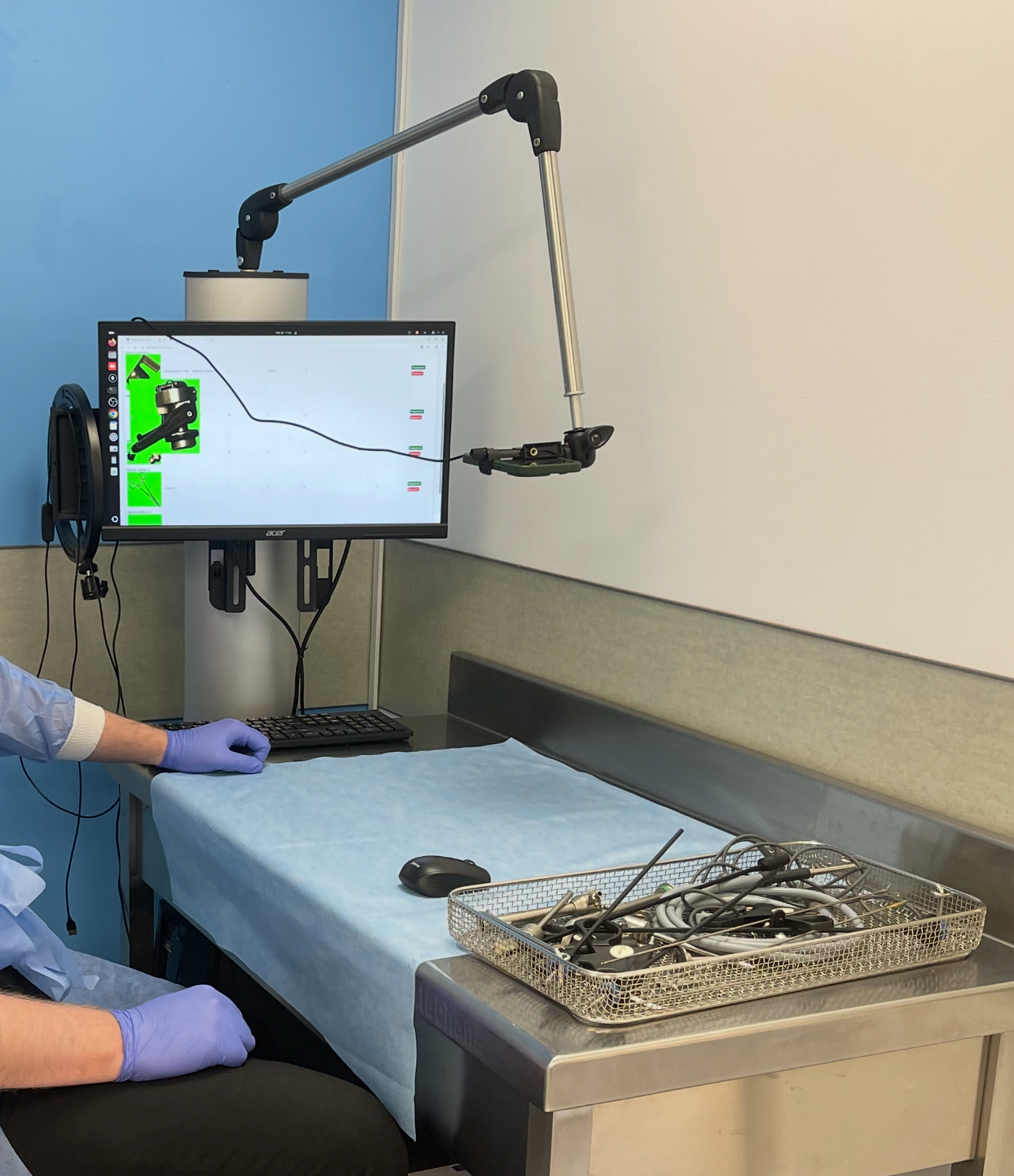
Why an interface matters, not only a model

For a hospital environment, training a model is not enough. Users need an interface where they can see the result, check similarity, add photos, correct descriptions, start retraining and control database quality.

Limitations and safety

Such systems should work as assistive tools. Solutions require testing under real conditions, error control, action logging and clear rules for when a human confirms or rejects the system output.

Related work

Projects and research from the laboratory

Topic links

Related AI directions

FAQ

Questions partners usually ask

Can the system learn to recognize new instruments?

Yes, if the process includes collecting quality photos, describing objects, checking errors and controlled model updates. This is why a convenient example-adding mode is important in prototypes.

Can a camera replace manual control?

At the research stage, the camera and model should assist a person rather than fully replace control. The automation level depends on accuracy, usage conditions and institutional rules.

What data is needed for such a project?

Usually the project needs photos or video fragments of objects, class descriptions, examples of difficult cases, shooting-condition information and criteria for expert validation.

Cooperation

Have a task in this direction?

The laboratory is ready to discuss research, prototypes and non-commercial projects with universities, laboratories, companies, hospitals and public institutions.

valerii.tkachuk@lnu.edu.ua