

Surgical Instrument Recognition System for St. Panteleimon Hospital
The laboratory researched and developed a camera-based computer vision system for recognizing, training and digitally cataloguing thousands of surgical instruments.
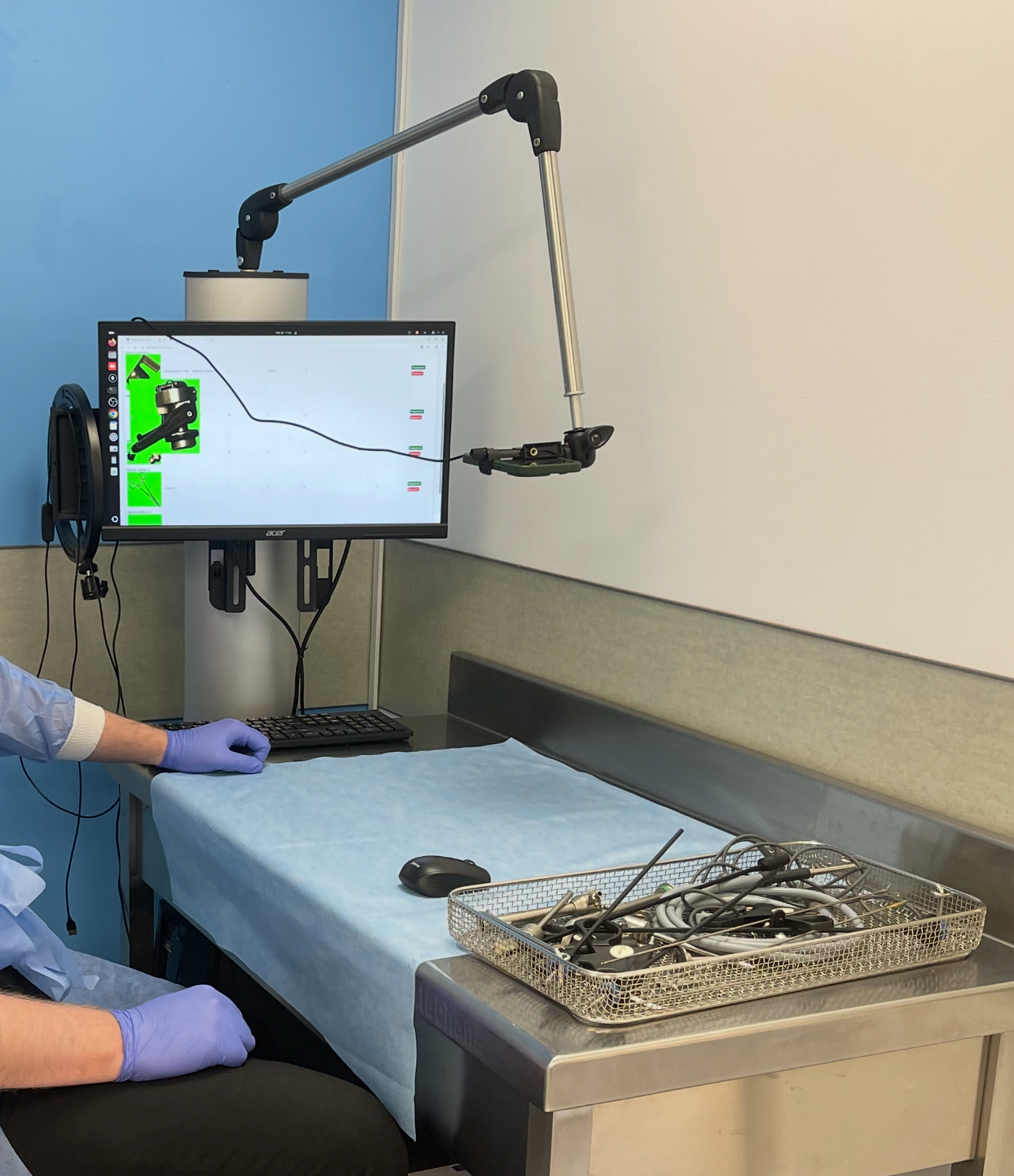
The Artificial Intelligence Technology Laboratory at LNU researched and developed a surgical instrument recognition system for studying workflows with instrument sets at St. Panteleimon Hospital. The idea is easy to state but technically demanding: help identify an instrument in front of a camera, connect it with a digital card and gradually build a reliable catalogue for thousands of items.
In hospital practice, instruments can look very similar, differ only in small details, belong to different sets and be used in different procedures. That is why such a system is not simply image search. It has to handle lighting, object position, the background of the operating surface, partial occlusion, sterile working conditions and the need to add new samples without complex technical preparation.
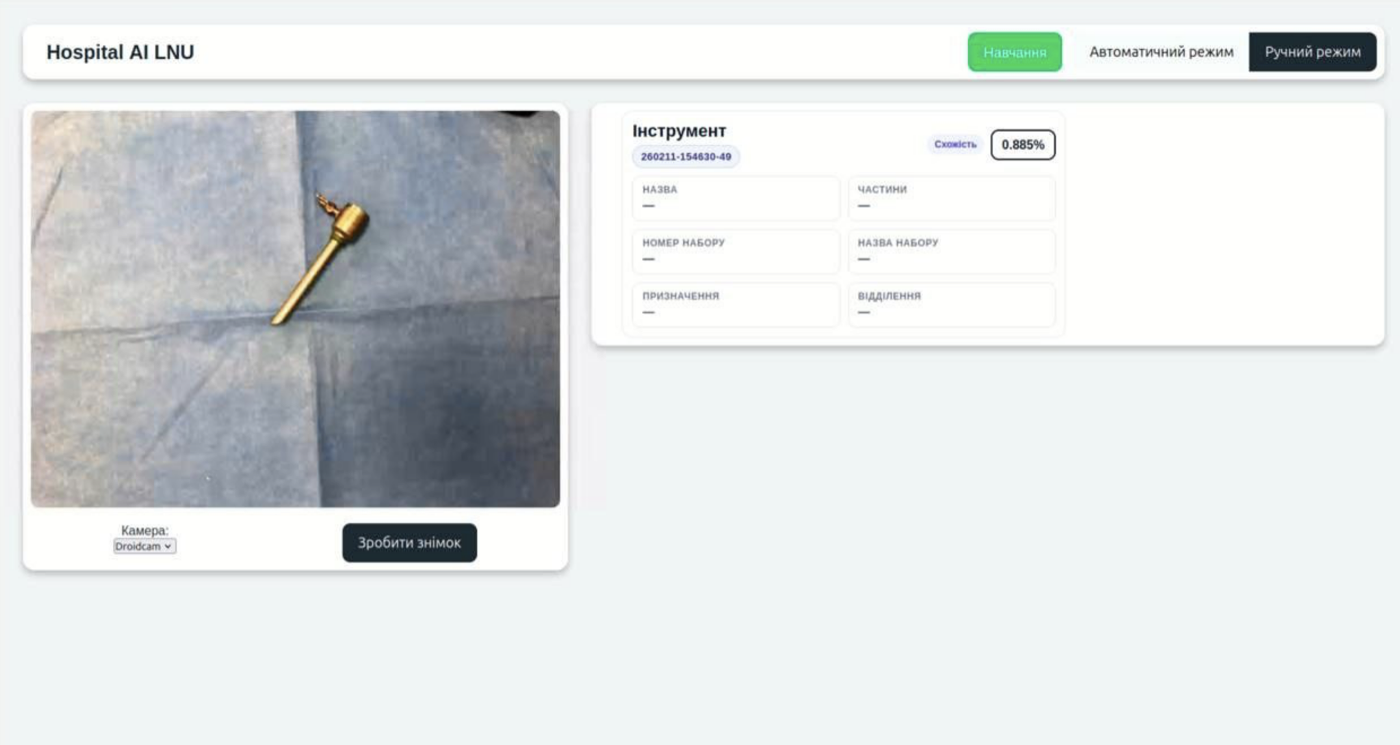
The developed prototype combines a camera, a workstation and a web interface for recognition, training and instrument data entry. The camera captures an instrument on the working surface, after which the system finds the closest match in the database and displays a card with an identifier, similarity score, name, parts, set number and set name, purpose and department.
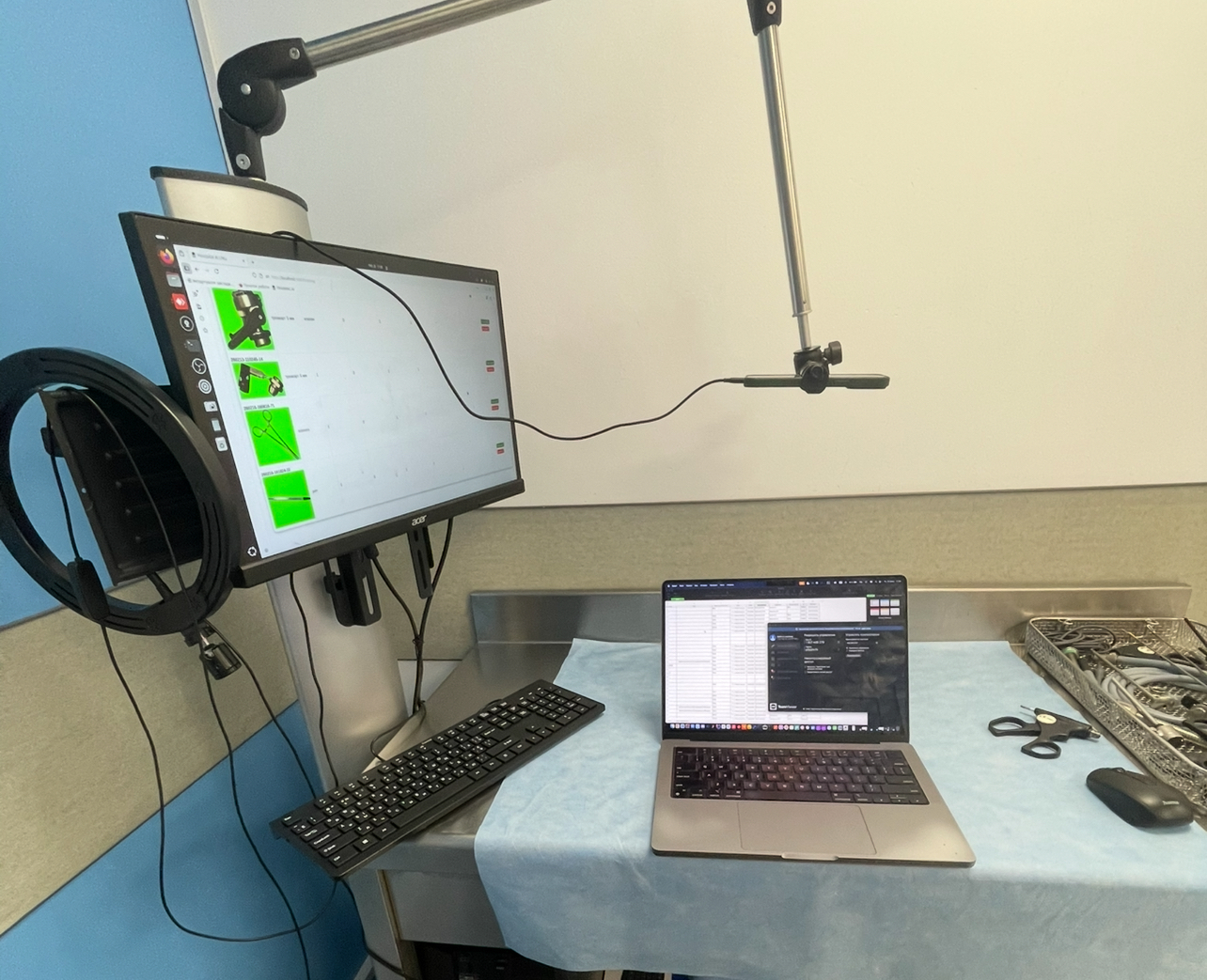
The system supports both manual and automatic modes. In manual mode, a user can capture a specific instrument and check the recognition result. Automatic mode is intended for scenarios where the camera analyzes the working area and assists with operational identification without extra user actions.
A separate focus of the research is self-service model training. Through the interface, users can add photos of new instruments, fill in descriptions, clarify set membership and start model training. This is important for a potential hospital environment where the catalogue is not static: instruments can be added, replaced, regrouped or receive updated service data.
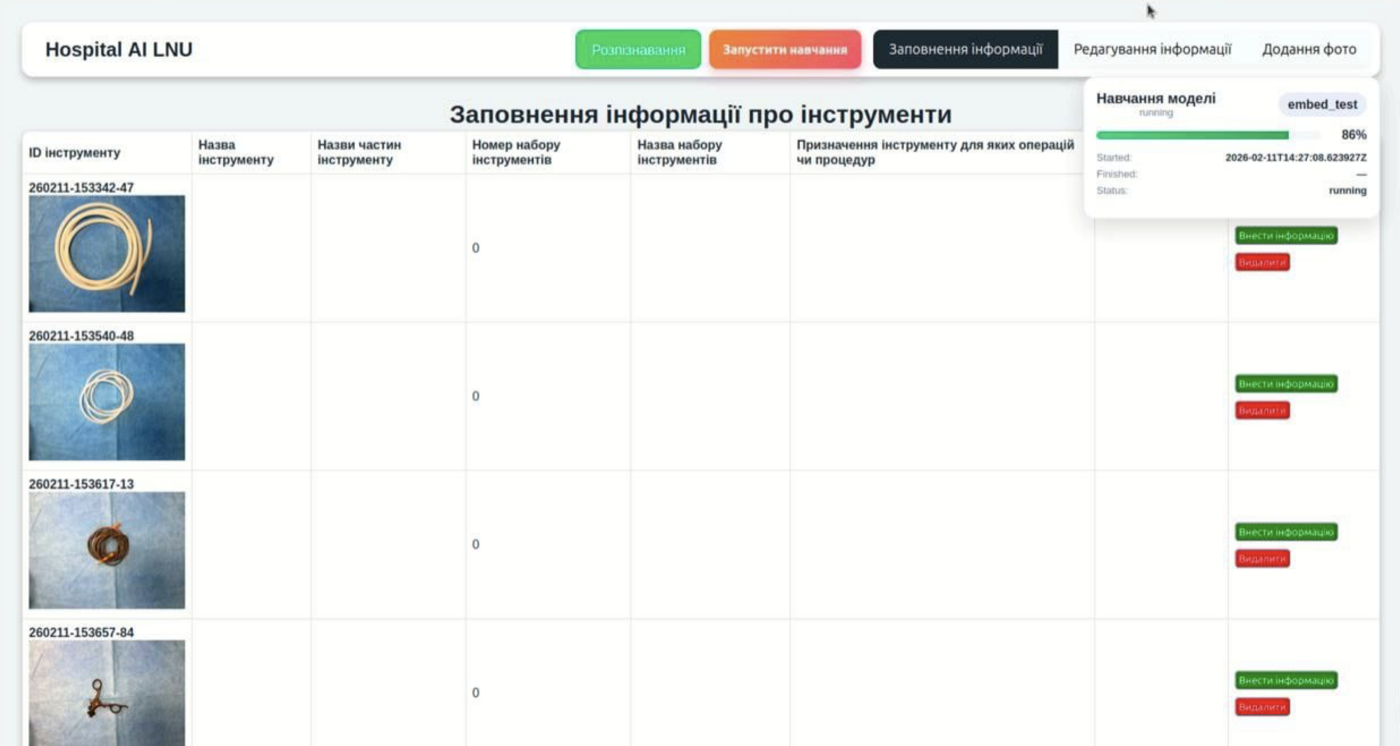
Technically, the project relies on computer vision, visual representations of instruments and search for the most similar samples in the database. For this system, model accuracy is only one part of the challenge. The quality of data collection is equally important: the same instrument has to be seen from different angles, in different positions and under conditions close to real use.
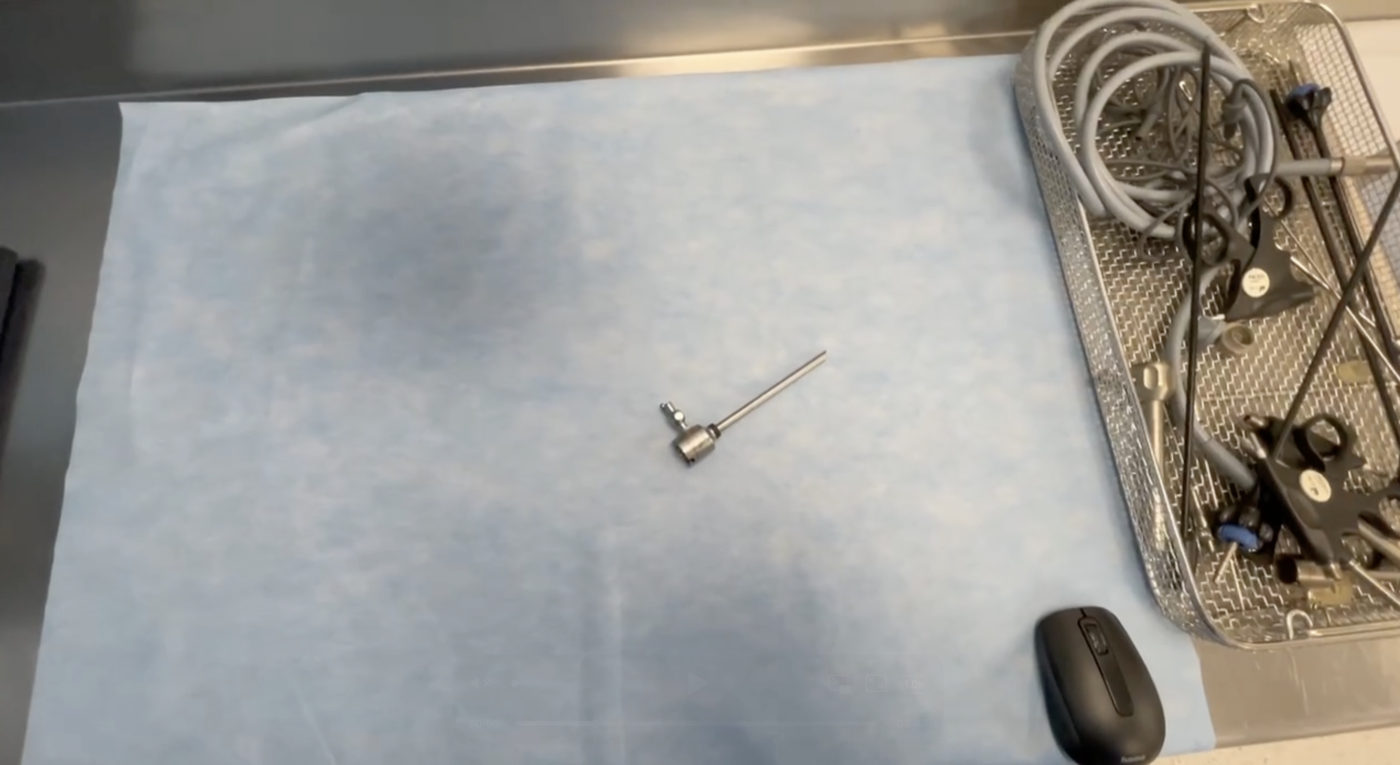
The result is an applied research system that demonstrates how a university AI laboratory can create solutions for specific medical workflows. It can become a basis for digital accounting, faster access to instrument information, preparation of sets and further research in medical computer vision.
The project also shows the practical value of cooperation between a university and medical institutions: hospital specialists define real requirements and use cases, while the laboratory turns them into a technological prototype that can be tested, retrained and improved in controlled conditions together with specialists.
Interested in cooperation?
The laboratory is interested in non-commercial and socially useful projects where web technologies, artificial intelligence, computer vision, data analytics or automation can help medical, educational or public institutions.