

Example tasks
Computer vision fits where visual data repeats and has practical value.
- surgical instrument recognition
- object counting in images
- traffic-flow analysis
- set completeness control
- similar-image search in a database
Computer vision helps turn images or video into data: find an object, count quantity, compare state, check presence or build statistics for a period.
We treat computer vision as part of a system, not as a standalone algorithm. Useful results require a camera or image source, a model, a validation interface, a database and error-handling rules.
Such solutions can become research prototypes for hospitals, cities, laboratories, education programs or companies that need to automate visual control.
Computer vision fits where visual data repeats and has practical value.
Accuracy is affected by lighting, angle, background, resolution, sample diversity and annotation quality. Therefore the data collection process matters as much as the model.
For practical use, an interface is needed where a user sees the result, can confirm or correct it and thereby improve the example base.
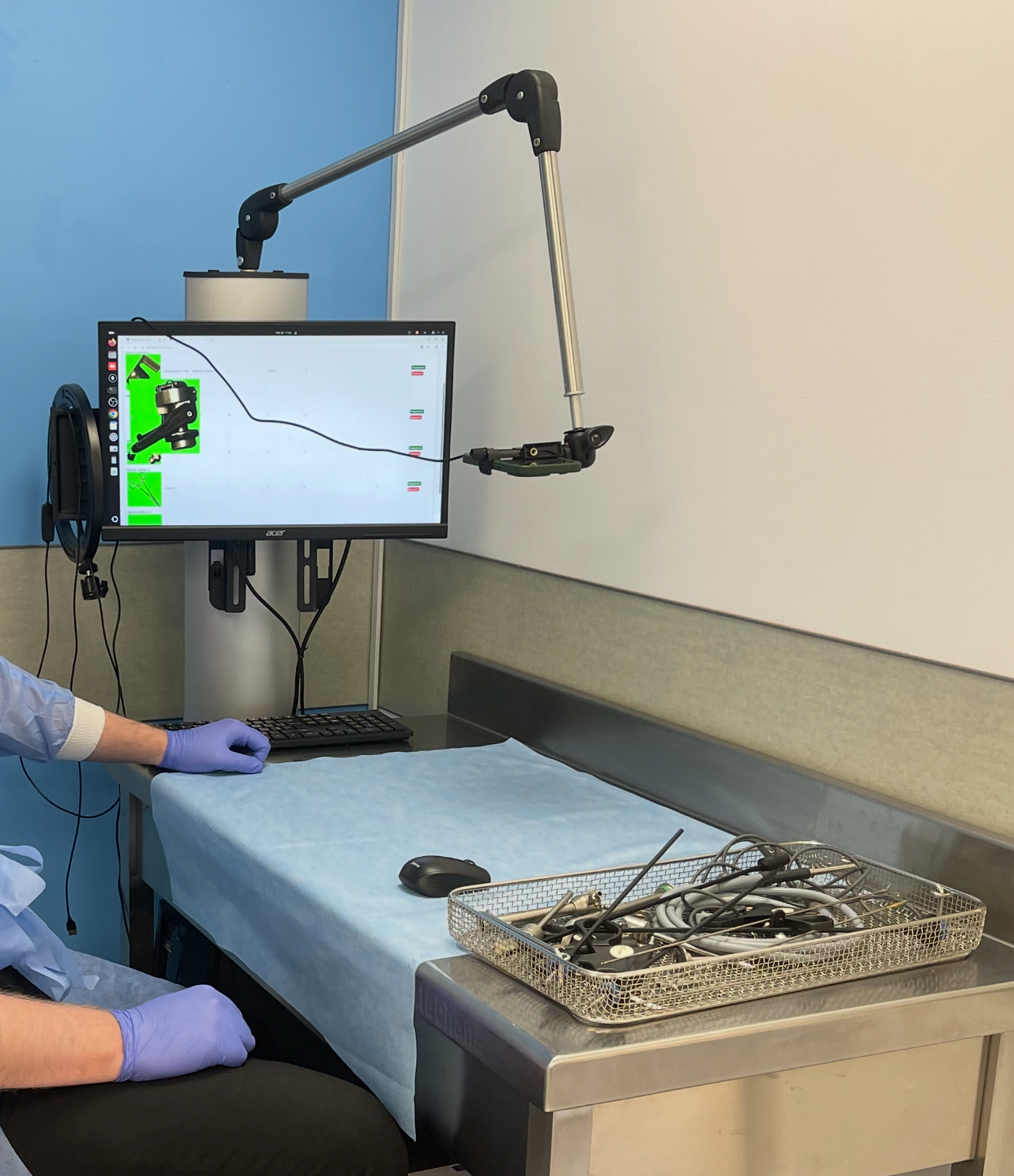 Research Surgical Instrument Recognition System for St. Panteleimon Hospital
 The laboratory researched and developed a camera-based computer vision system for recognizing, training and digitally cataloguing thousands of surgical instruments.
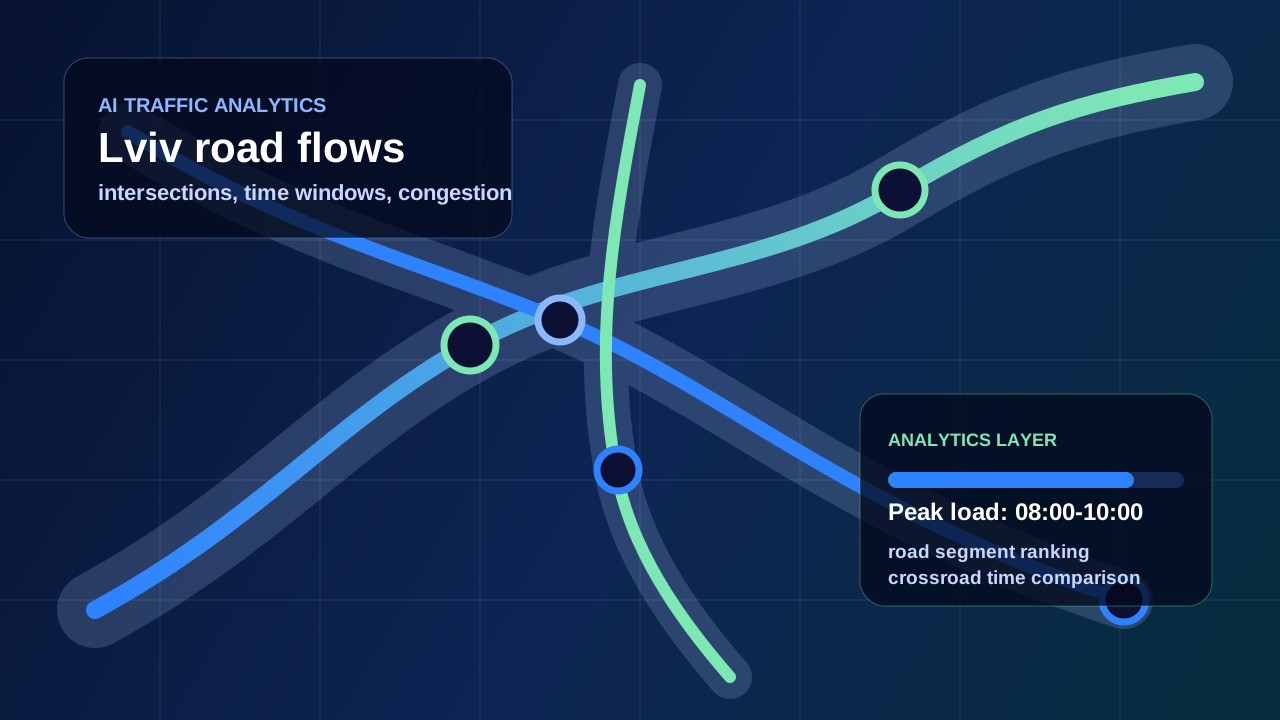 Research Intelligent Analysis of Traffic and Congestion on Lviv Road Infrastructure
 A research project by the laboratory together with Lviv City Council for analysing traffic flows, intersection load and congestion factors on Lviv streets.
Yes, but video adds complexity: frames, processing frequency, object tracking, time-based statistics and server-resource requirements.
Yes, if objects are sufficiently visible and there are rules to avoid double counting. Video often requires tracking across frames.
A description of objects, sample images or video, correctness criteria, difficult cases and an understanding of operating conditions are needed.
The laboratory is ready to discuss research, prototypes and non-commercial projects with universities, laboratories, companies, hospitals and public institutions.