

Intelligent Analysis of Traffic and Congestion on Lviv Road Infrastructure
A research project by the laboratory together with Lviv City Council for analysing traffic flows, intersection load and congestion factors on Lviv streets.
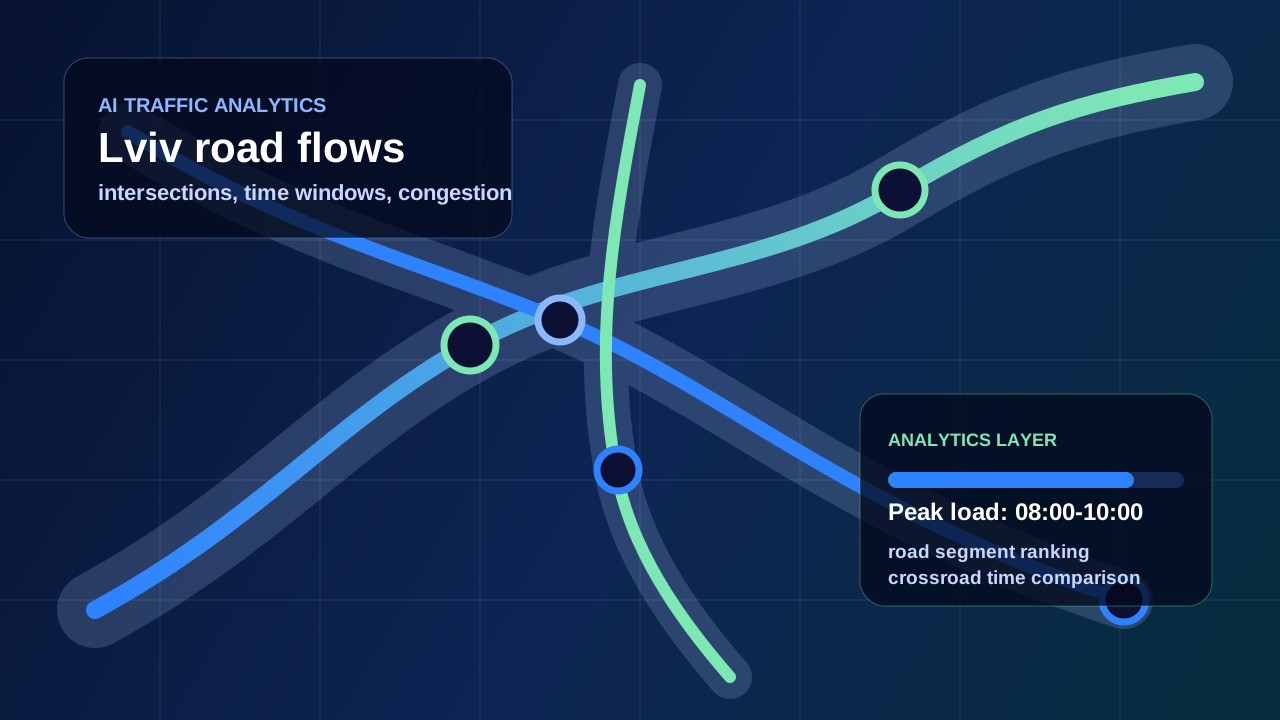
The Artificial Intelligence Technology Laboratory at LNU is researching intelligent traffic analysis for the road infrastructure of Lviv in cooperation with Lviv City Council. The goal of the project is to transform transport observations for selected dates and time intervals into structured analytics that can be used to evaluate the actual load of intersections, streets and transport corridors.
The research focuses not on a single traffic fragment, but on a broader model of city flows: how many vehicles pass through a specific intersection, how intensity changes during the day, which roads accumulate the highest load and where recurring transport complications appear.
The system processes road-infrastructure video materials and time slices, forming measurable indicators for each intersection. For an analyst, this means the ability to choose a date, time window, location or direction of movement and receive a calculation of the number of vehicles passing through the selected segment.
A separate research focus is road-level aggregation: the system can compare several time periods, identify peak hours, rank the most loaded directions and show how load changes between neighbouring intersections. This approach moves the analysis from a subjective impression of congestion to a quantitative traffic picture.
An important part of the project is an interactive map. It gives city council staff a convenient way to view traffic flows across the city, move between intersections, inspect statistics for a selected period and identify areas that require deeper analysis.
The map can support decisions around traffic organization: optimizing traffic-light phases, prioritizing repairs or reconstruction, analysing the effect of closures, evaluating street load near important facilities and finding causes of regular delays on routes.
The analytical part of the project is focused on practical city-management questions. If a certain road regularly has high load during the same period, the system helps determine whether it is a local intersection issue, a result of traffic being redirected from nearby streets, the effect of road works or part of a wider transport pattern.
For the city, this creates a basis for evidence-based decisions: not only reacting to congestion after it appears, but studying patterns, anticipating problematic segments and planning changes based on data. In the future, such analytics can complement Lviv transport models and support strategic urban mobility planning.
The technical implementation combines server-side logic, a web interface and a database. The project uses .NET for the backend, NuxtJS for the interactive interface and map, and MS SQL for storing structured metrics, intersections, time intervals and calculation results.
The project demonstrates how a university laboratory can help a city work with applied data from complex infrastructure. For Lviv, it is not just a technical experiment, but a study of tools that can make transport planning more accurate, transparent and better connected to the actual behaviour of the road network.