

What a system may include
The composition depends on the workflow, but typical modules often repeat.
- roles and permissions
- database and directories
- admin panel
- APIs and integrations
- action logging and audit
- document and report export
Custom software makes sense when ready-made services do not match an organization’s rules, data structure or required level of control. In such cases, the system is designed around the process, not the other way around.
We start not with technology, but with the task: who the users are, what data they enter, what decisions they make, what reports are needed and where errors appear.
After that, it becomes possible to define the minimum useful version, choose the stack and gradually add functionality without unnecessary complexity.
The composition depends on the workflow, but typical modules often repeat.
For serious systems, error control, backups, clear data structure, documentation and a clear development path after the first release are important.
This direction fits organizations where spreadsheets, messengers and manual files no longer provide enough control over workflows.
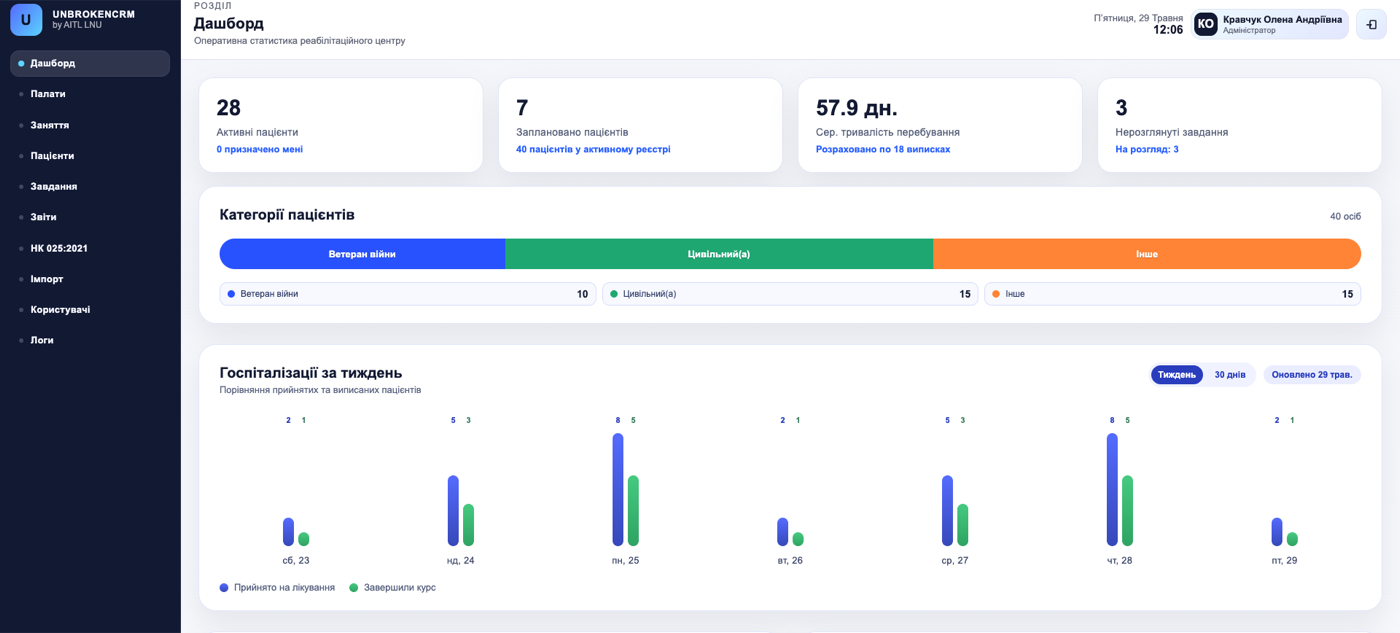 Research Research and Development of a CRM System for Unbroken Hospital
 The laboratory researched and developed a demonstrational CRM system for a medical institution: patients, staff, wards, tasks, NK 025:2021 diagnoses, PDF reports, permissions and audit logs.
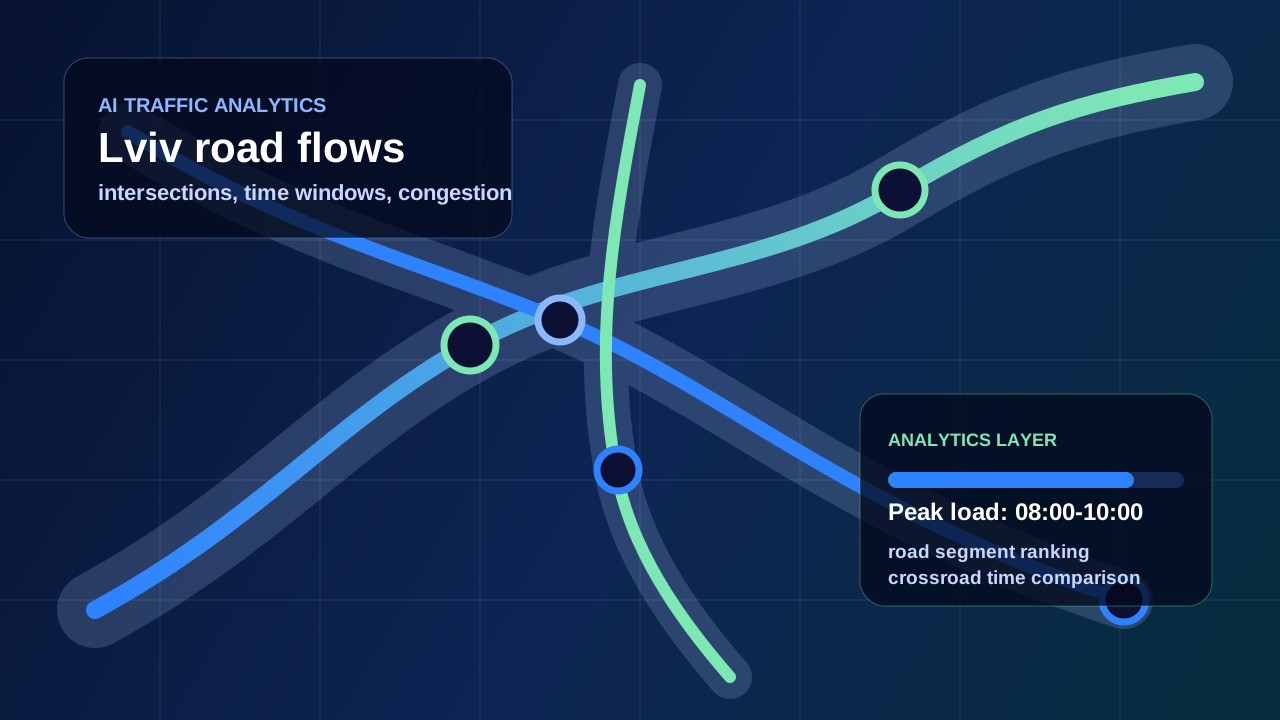 Research Intelligent Analysis of Traffic and Congestion on Lviv Road Infrastructure
 A research project by the laboratory together with Lviv City Council for analysing traffic flows, intersection load and congestion factors on Lviv streets.
Yes. This is the point of custom development: real rules are described first, and only then data, interfaces and permissions are designed.
A full specification is not always available at the start. But the problem description, document examples, user roles and critical actions the system must support are needed.
Yes, and often this is the right order. First, data and workflow should be organized; then AI search, classification, recommendations or computer vision can be added.
The laboratory is ready to discuss research, prototypes and non-commercial projects with universities, laboratories, companies, hospitals and public institutions.