

Research and Development of a CRM System for Unbroken Hospital
The laboratory researched and developed a demonstrational CRM system for a medical institution: patients, staff, wards, tasks, NK 025:2021 diagnoses, PDF reports, permissions and audit logs.
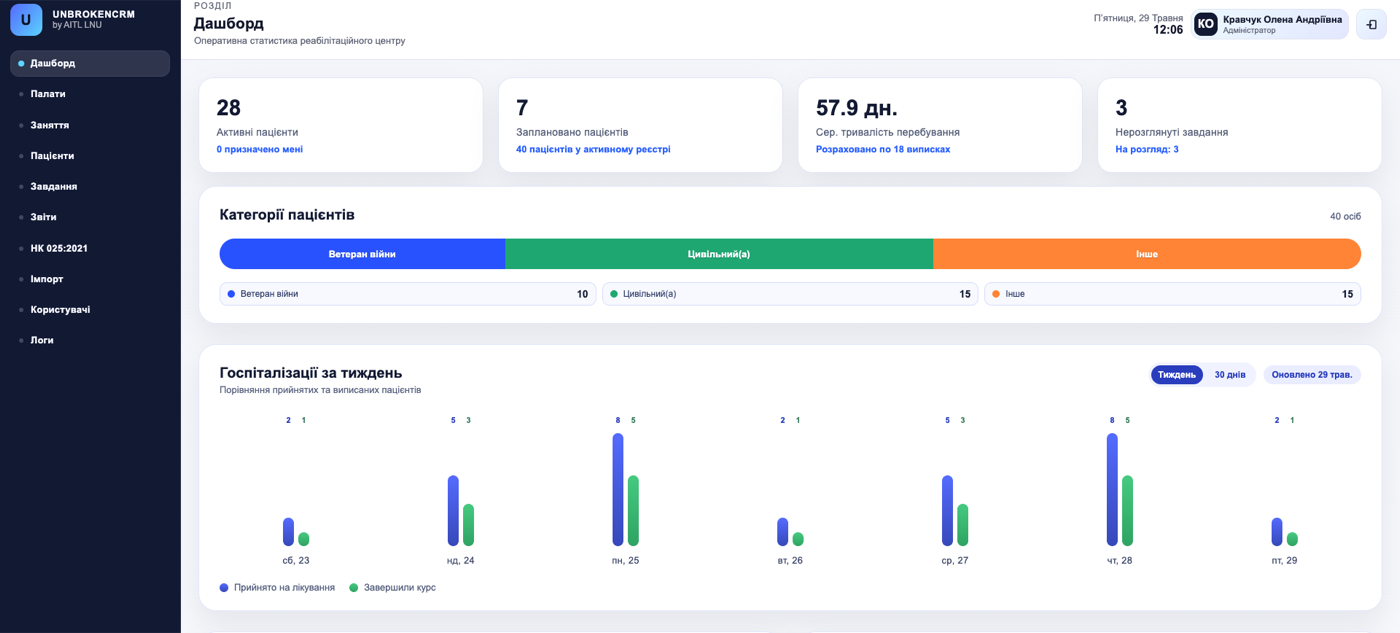
The Artificial Intelligence Technology Laboratory at LNU researched and developed a demonstrational CRM system for scenarios inspired by the work of Unbroken hospital. This is not a statement about production deployment. The project is an applied research and development prototype for modelling a digital environment that can centrally manage patients, staff, wards, tasks, diagnoses, reports and access rights.
Such systems matter for medical institutions where daily work consists of many parallel processes: admissions and discharges, assigning responsible doctors, scheduling rehabilitation sessions, controlling bed occupancy, transferring tasks between staff, generating documents and auditing changes. The research goal was to show how these processes can be brought into a single managed model.
All screenshots in this article show a test interface of the prototype. The information shown on the screens is demonstrational: names, accounts, diagnoses, wards, events and metrics are fictional and have no relation to real patients or employees. The prototype is not a medical device and is not intended for independent diagnosis, treatment or clinical decision-making.
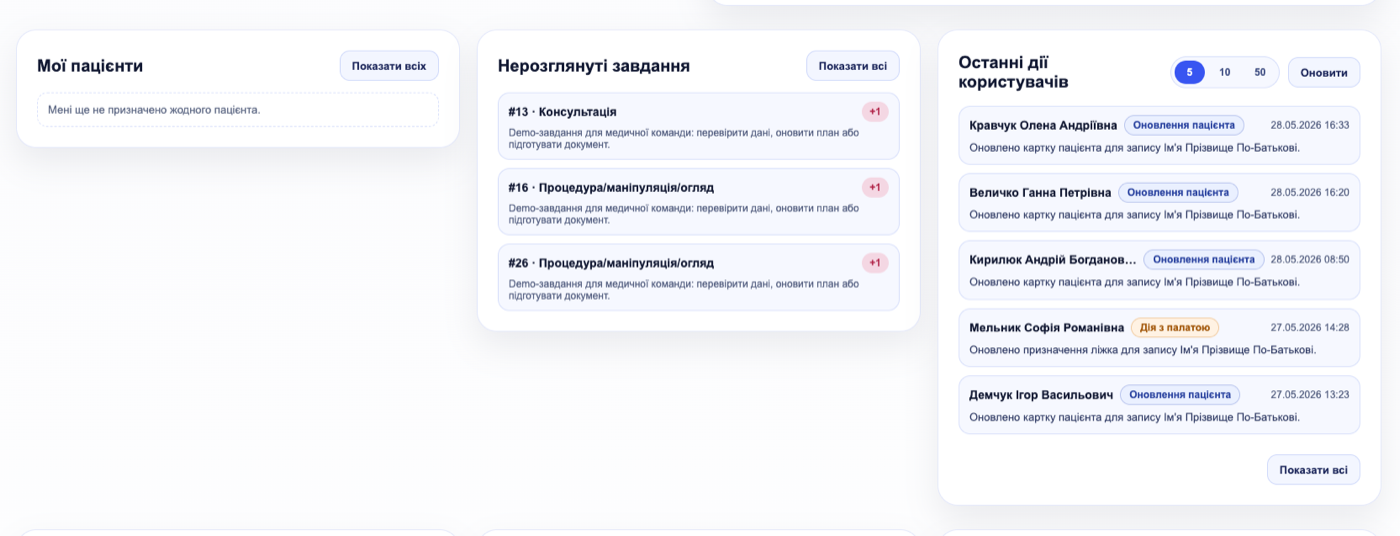
The first layer of the system is an operational dashboard. It brings together key indicators: active and planned patients, average length of stay, unresolved tasks, patient categories and hospitalization dynamics. For a department head or administrator, this is a quick way to understand the state of the centre without moving between many separate tables.
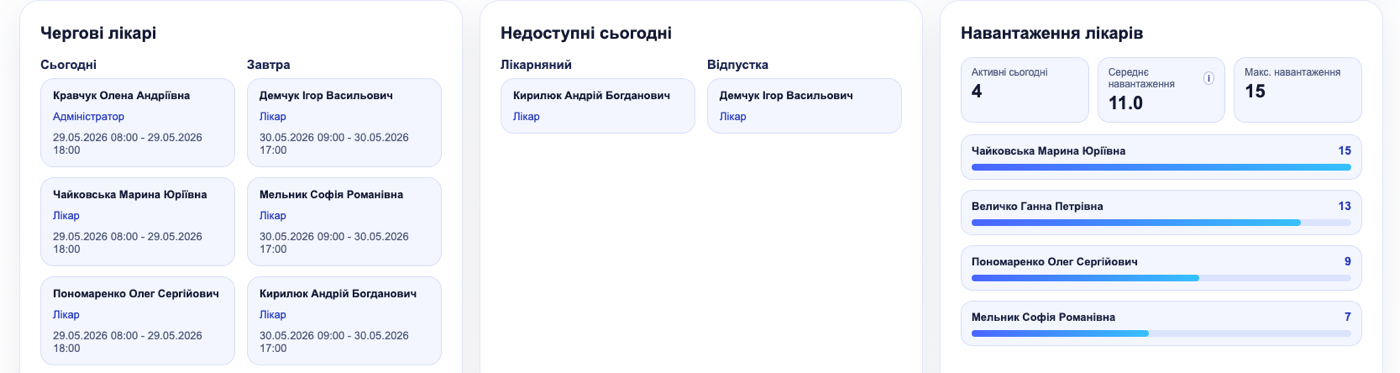
A separate dashboard block shows duty doctors, absent employees and current doctor workload. It helps model task distribution between specialists, detect overloaded roles and plan changes of responsibility without manually collecting data from multiple sources.
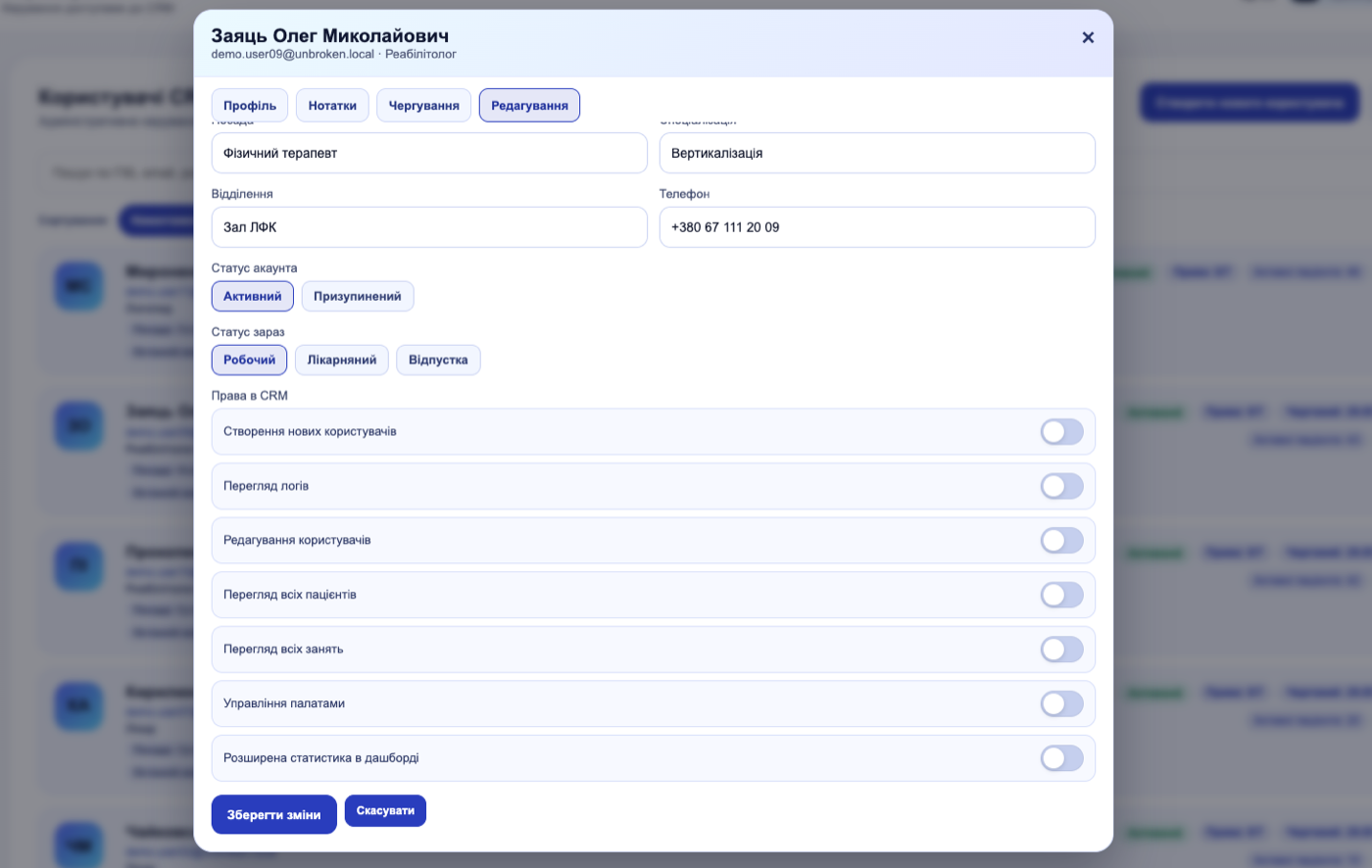
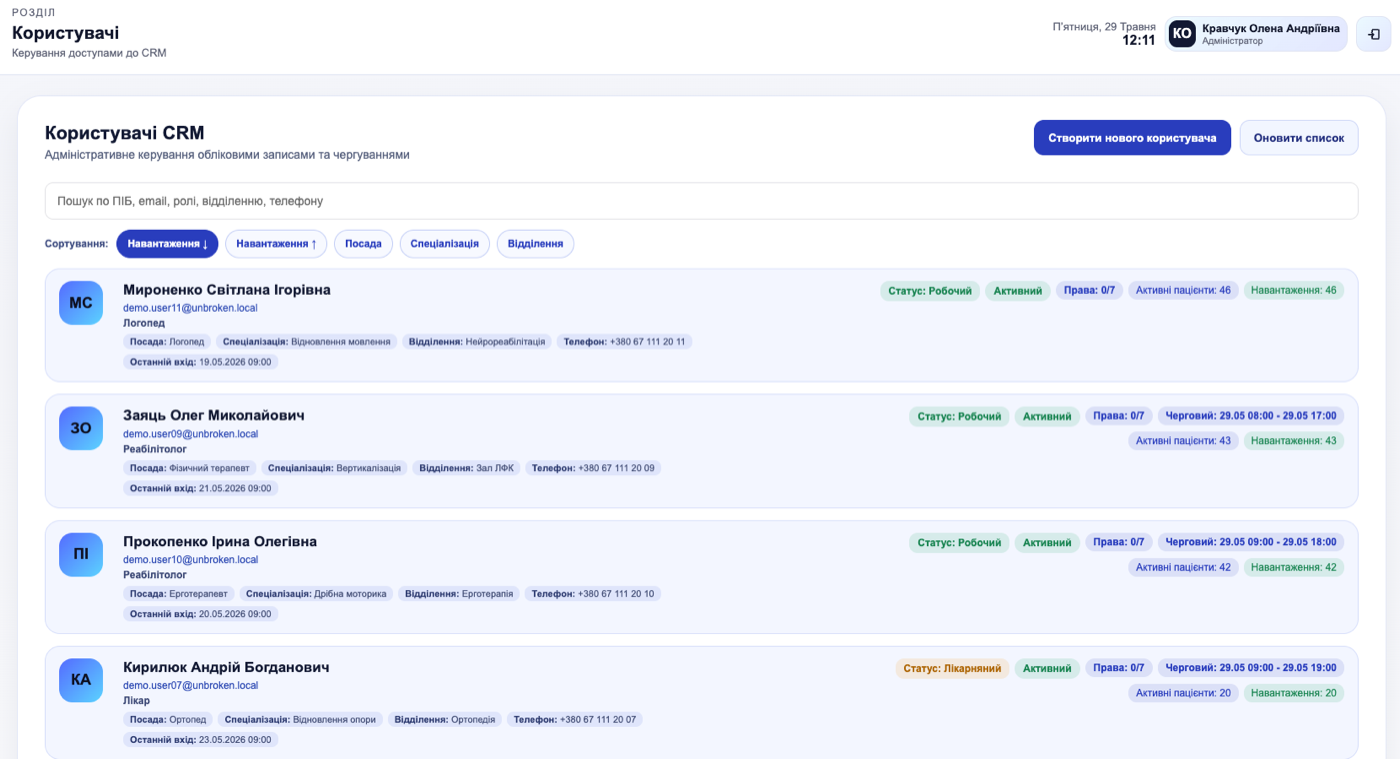
The staff module is designed as a full employee onboarding and access-management system. For each user, the CRM can store role, specialization, department, phone, account status, current work status, shift schedule and permission set. Every critical action can have its own access rule: creating users, viewing logs, editing staff, accessing patients, managing wards or viewing extended statistics.
The user list shows roles, specializations, departments, shifts, active patients and workload. This structure is useful not only for account administration, but also for researching how a digital system can support transparent responsibility distribution inside a medical team.
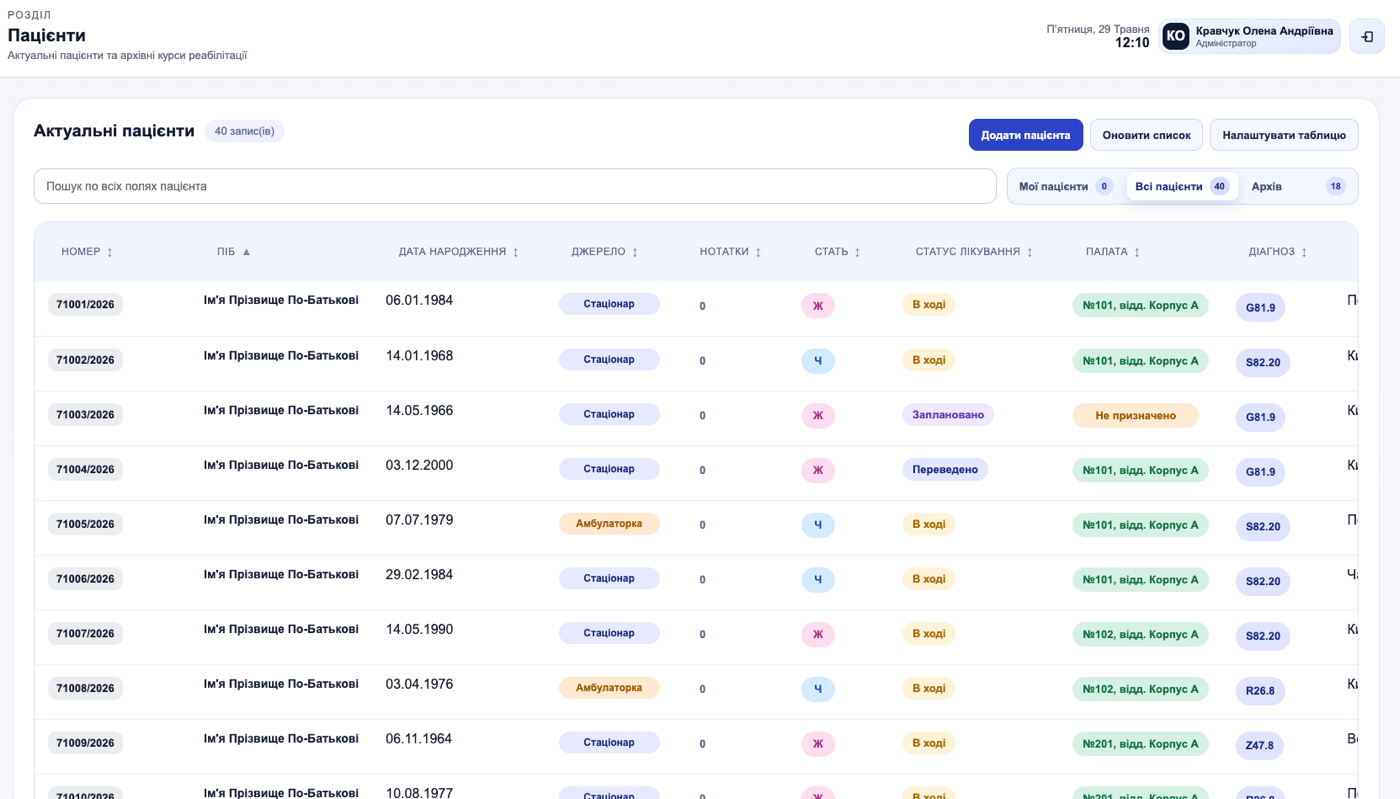
The patient module combines active and archived rehabilitation courses, full-field search, table configuration, treatment status, ward, gender, admission source, diagnosis and responsible specialists. In the research model, a patient is not just one table row: it is the centre where ward data, sessions, history, tasks, comments and reports are connected.
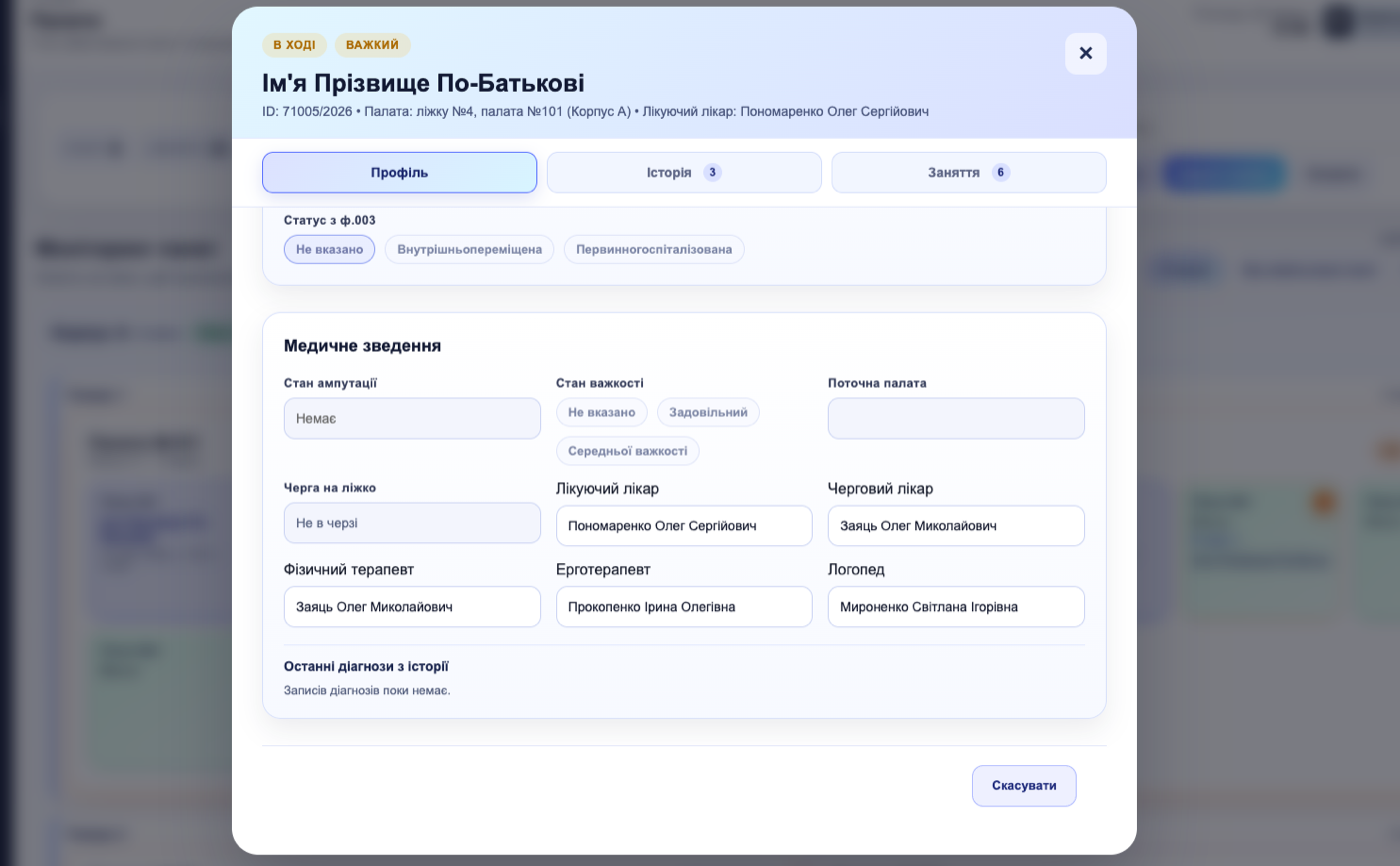
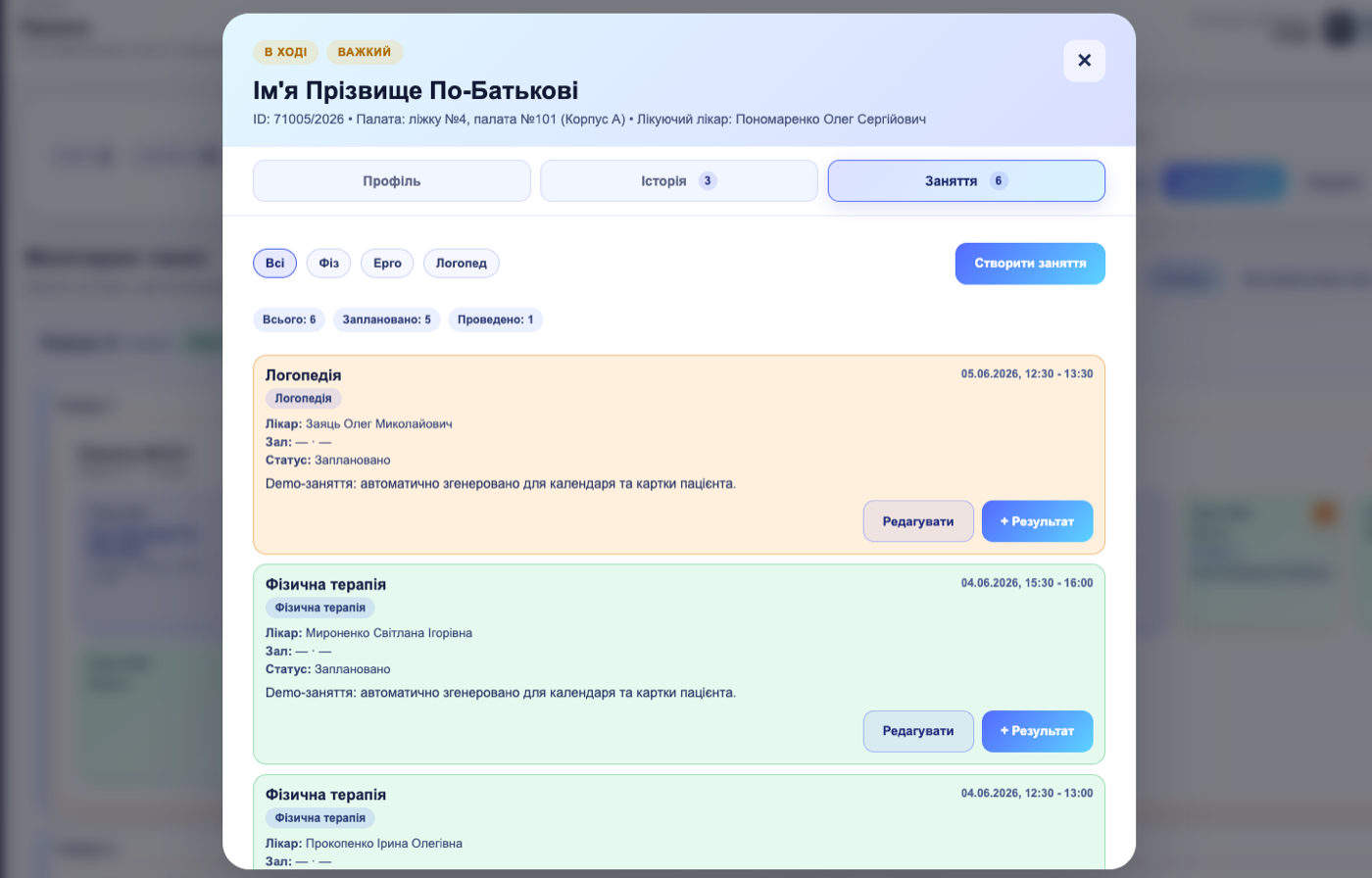
The patient card has profile, history and sessions tabs. It can show key parameters, responsible doctors and therapists, current ward, comments and work plan. This is especially important for rehabilitation processes, where multiple specialists need the same context while still working within their own access rights.
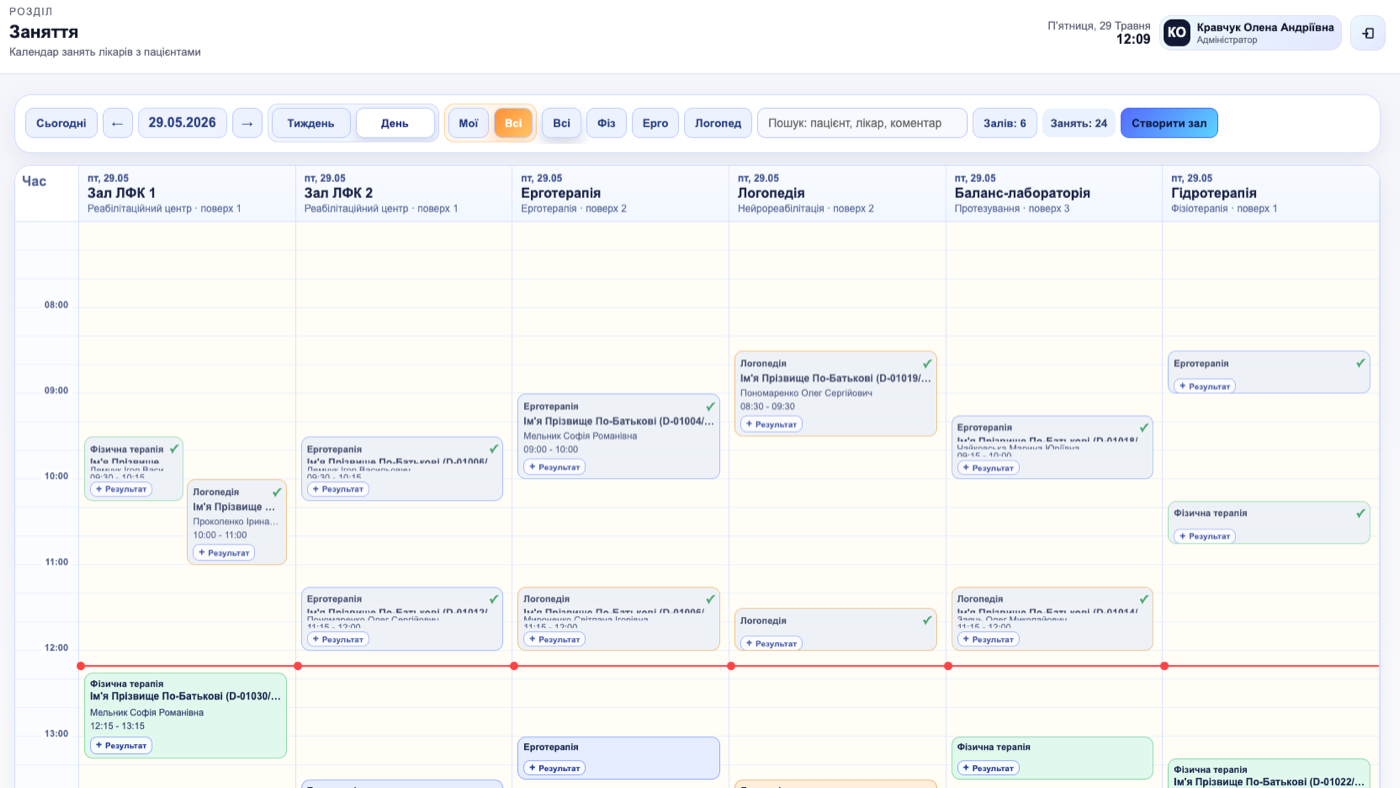
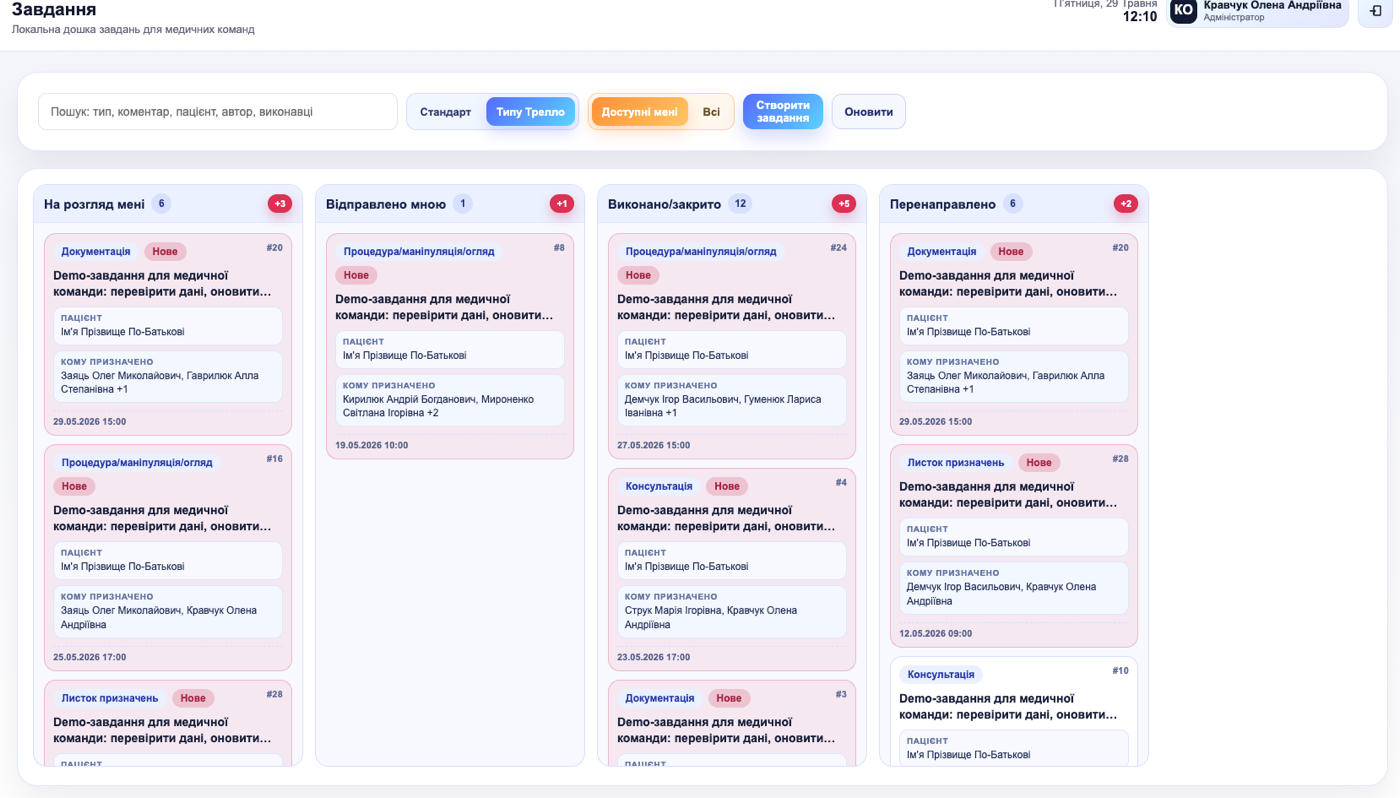
The project separately studied ward and bed management. The prototype shows buildings, floors, rooms, occupied and free beds, bed queues, planned admissions and discharges. This makes it possible to model scenarios where medical and administrative staff see not just a room number, but the actual operational picture of patient placement.
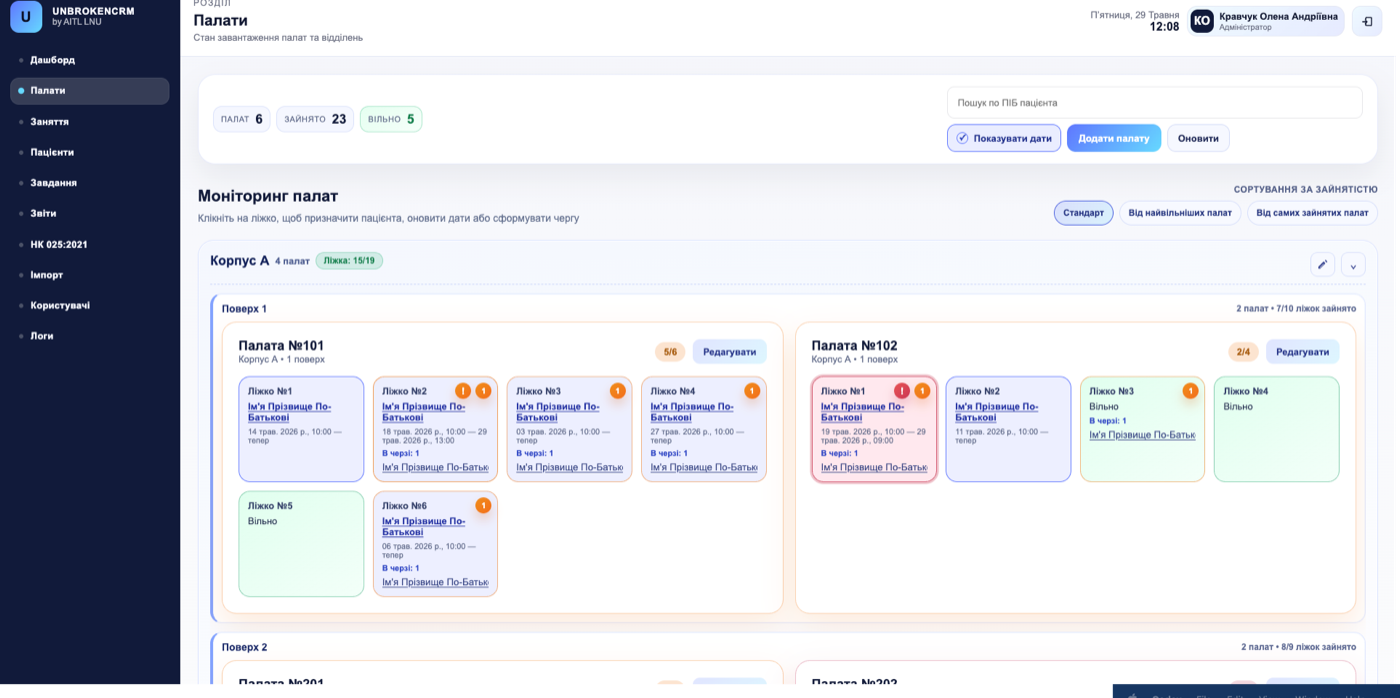
For these processes, current occupancy is not enough. Future events also matter: who should be discharged, who should be admitted, where a delay appears and who should confirm the next action. For that reason, the prototype also presents a separate admission and discharge flow.
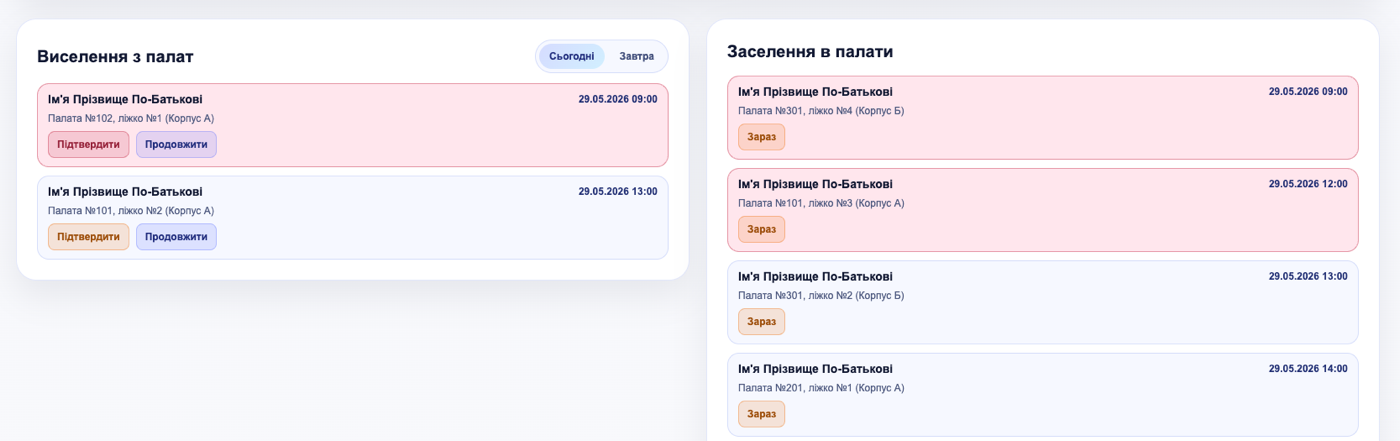
Team communication is implemented through a Trello-like task system. Tasks can be treated as internal messages between employees: clarifications, responsibility transfer, document preparation, consultation, procedure or execution control. The board includes statuses such as review, sent, completed or closed, redirected, as well as filters and quick task creation.
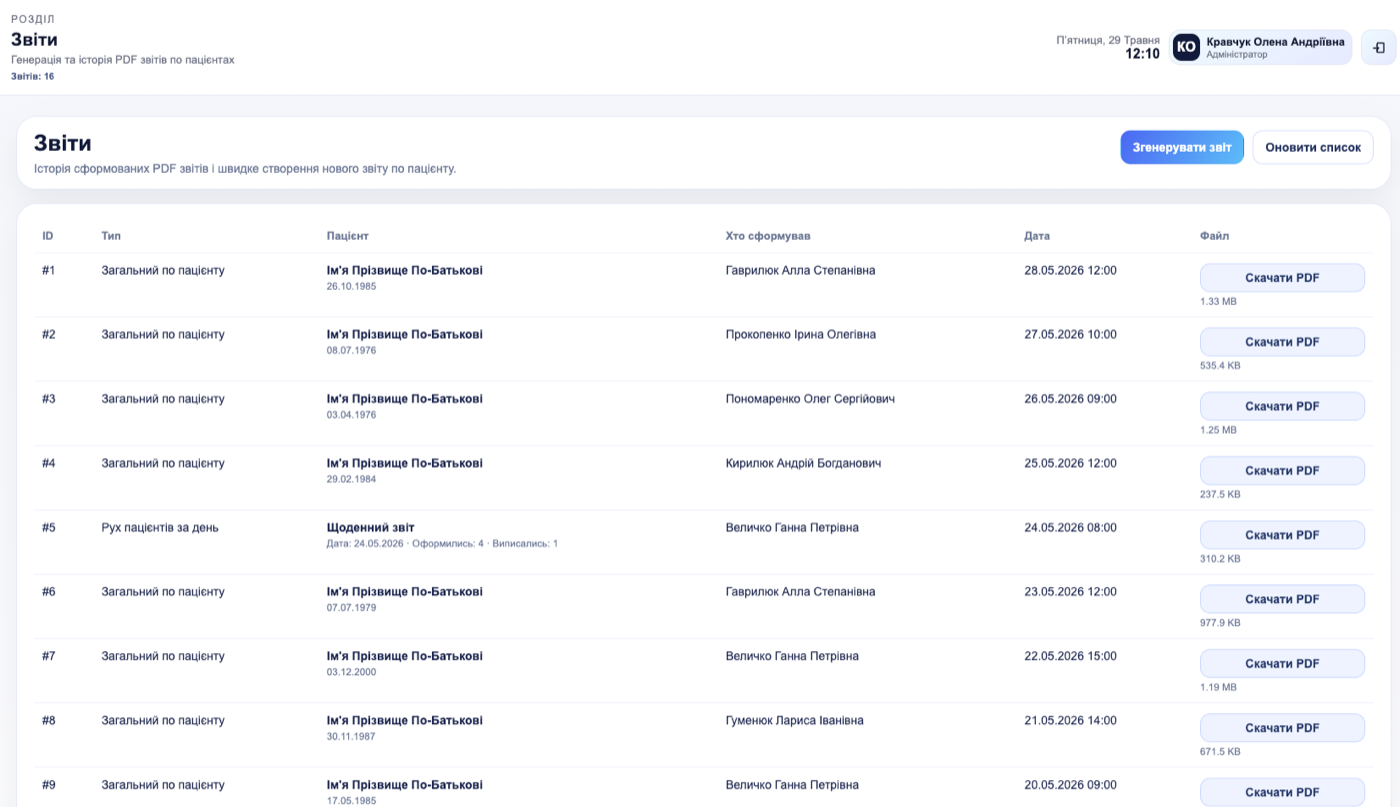
For documents, the prototype includes PDF report generation and a history of generated files. This module can be used as a standardized data export for a patient, patient movement or a time period, but in a real integration it must be adapted to the internal regulations and requirements of a specific institution.
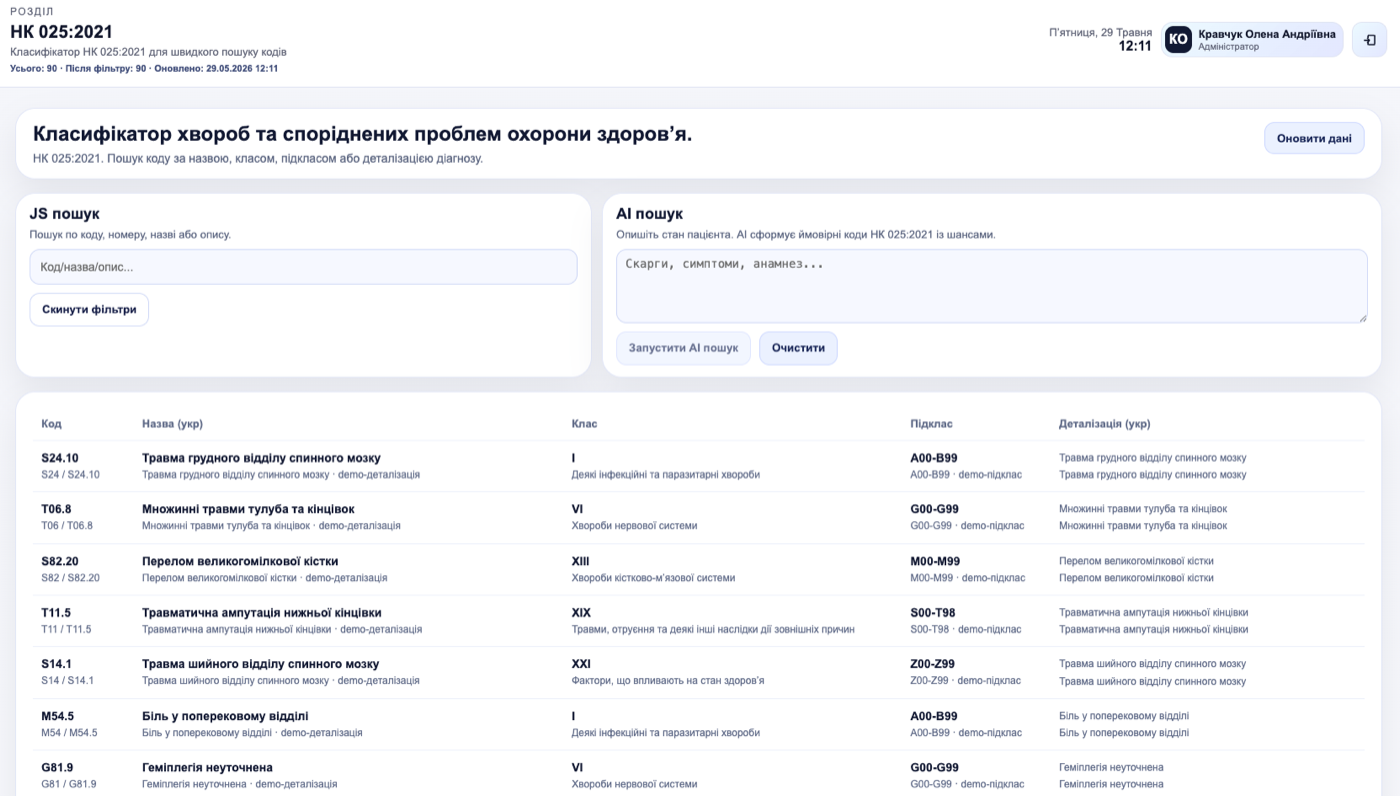
The medical context is supported by integration of the NK 025:2021 disease classifier. The prototype includes regular search by code, name or description, as well as an experimental AI search that can suggest probable codes from a textual description of complaints or history. This is a research tool for search assistance, not automatic diagnosis assignment.
From a technical perspective, the research covered not only the interface, but also permissions architecture, logging and links between modules. The system records user actions, separates access to functions and makes it possible to trace changes in patient cards, tasks, wards and reports. For a medical environment, this is critical because digitalization has to be convenient, controlled, transparent and suitable for audit.
Further integration of such a CRM into any hospital requires a separate analysis of processes, technical infrastructure, data protection requirements, regulatory constraints and internal rules of the institution. If this material is being read by a responsible person from a medical institution, the laboratory is ready to discuss adaptation and integration of such a system into your hospital after detailed design, testing and requirements approval.
Interested in cooperation?
The laboratory is interested in non-commercial and socially useful projects where web technologies, artificial intelligence, computer vision, data analytics or automation can help medical, educational or public institutions.